
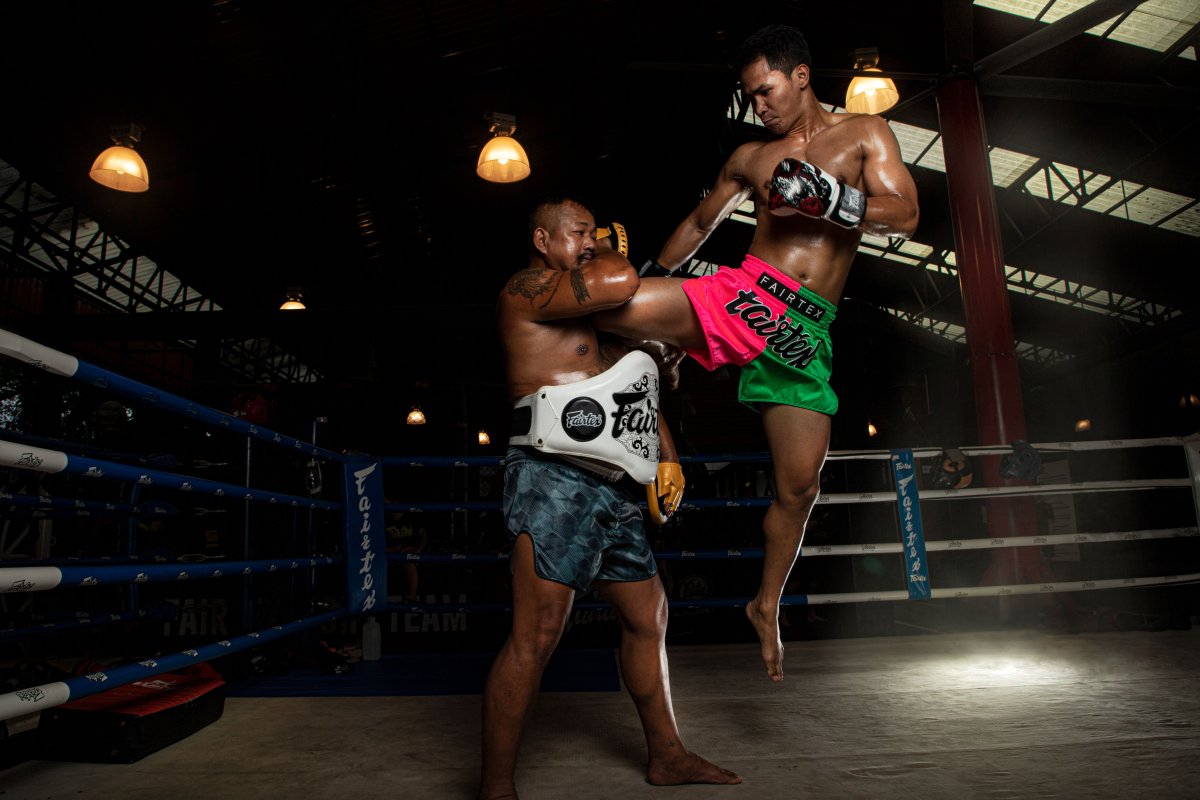
Choosing among Muay Thai body protectors starts with the drills you hold, not the vest that looks most protective. A coach holding body punches, kicks, or knees has different needs from a fighter choosing equipment for sparring. Consider the vest’s intended role, documented construction, and how it fits during movement before deciding.
This guide compares Fairtex’s three options using their listed features. The TV1 uses Fairtex Syntex over four layers of padding; the TV2 uses microfiber and has three padded target points for focused drills; the PV1 has a reinforced plastic insert between foam layers, described as helping it maintain its shape with repeated use. These details can help you narrow your choice, but they don’t establish unlisted features such as protection ratings or sizing.
What Is a Muay Thai Body Protector, and Who Needs One?
A body protector is padded torso equipment worn by a coach or pad holder during striking drills. It gives the athlete a target for punches, kicks, and knees while the coach guides controlled practice. It isn’t a guarantee against injury, and it serves a different role from gear worn by a fighter. The Muay Thai striking toolkit makes torso-target drills a natural part of training, but the right equipment depends on how those drills are run.
Each item has a distinct job: gloves protect the hands, shin guards cover the lower legs, and a head guard protects the head. A body protector covers the torso, while belly pads and kick pads are separate equipment categories used for pad work. These terms aren’t interchangeable. Coaches comparing torso options can review Fairtex’s Muay Thai body protectors by construction and intended training use.
When does a coach need a protective vest?
A coach may choose a vest when holding combinations that include body punches, kicks, or knees, or when partner drills call for a padded torso target. Start by identifying the strikes and combinations in the session, then consider how often you’ll hold and whether the vest feels comfortable during coaching movements. A coach holding a sequence of body strikes has different needs from a fighter wearing equipment during sparring.
Body protector vest or belly pad?
Both are used in training, but their designs and roles differ. A vest is worn over the torso; a belly pad is another type of pad-holding equipment. Don’t choose by label alone. Consider the strikes you’ll receive and how you prefer to hold for them, then compare the relevant construction details. If you’re weighing that alternative, explore the Muay Thai belly pads category separately.
Which Muay Thai Body Protector Features Should You Compare?
Compare documented features rather than assuming what a product photo represents. Material, padding construction, target layout, and stated training purpose give coaches a practical basis for comparing these muay thai body protectors. The American Academy of Orthopaedic Surgeons also includes proper protective equipment among its martial arts injury prevention guidance.
| Vest | Material | Padding construction | Target layout | Documented training purpose |
|---|---|---|---|---|
| Competition Protective Vest PV1 | Exterior material not listed here | Reinforced plastic insert between foam layers | Not listed | Competition protective vest |
| Trainer Vest TV2 | Microfiber | Specific padding-layer construction not listed | Three padded target points | Focused drills |
| Trainer’s Protective Vest TV1 | Fairtex Syntex | Four-layer padding system | Not listed | Trainer’s protective vest |
How do construction and materials affect your choice?
The PV1’s plastic insert sits between foam layers, a construction detail described as helping the vest maintain its shape with repeated use. The TV1 pairs Fairtex Syntex with four padding layers, while the TV2 is made from microfiber. Use those listed details to compare construction, but don’t infer weight, protection ratings, or care requirements from them. Check current product descriptions for any unlisted specifications, and compare care instructions with your cleaning routine and training schedule.
What should you know about target-point layouts?
The TV2’s three padded target points are a documented feature for focused drills. This layout may matter if your sessions use deliberate target placement. The available details don’t specify target points for the PV1 or TV1, so don’t assume they have them. Match the listed layout to the drills you hold, then compare construction and intended role. You can compare Muay Thai body protectors with those criteria in mind.
How to Choose a Muay Thai Body Protector for Your Training
Use a straightforward order to narrow the options: identify who will wear the vest, define the drills, compare documented construction, and check fit. Ask whether it’s for frequent pad holding, focused target drills, or another training role. These demands aren’t identical, so a feature that matters for one session may be less relevant for another.
- Define the role: Is the wearer coaching and holding, or selecting equipment for a fighter?
- List the drills: Note the strikes, combinations, and target placement used in regular sessions.
- Compare construction: Use listed materials and padding details, not appearance or assumptions.
- Check fit: Follow the product’s own guidance and confirm the vest works for its intended wearer.
Research on Muay Thai injuries examines protective equipment and injury likelihood. That provides context, but it isn’t a performance rating for any particular vest. Treat equipment as one part of considered training, not as a promise of a specific safety outcome.
What fit and mobility checks should you make?
Check that the vest provides the coverage described for the product and stays securely positioned according to its fit instructions. Have the intended wearer try it on and move through the actions required for coaching, such as turning and holding targets. Comfort is personal. If a vest feels restrictive during those movements, it may not suit regular sessions, even if its construction looks appealing.
Which common buying mistakes should you avoid?
Don’t mistake a trainer-focused vest for a belly pad or another category of protective equipment. Don’t assume heavier padding is automatically a better fit, or infer protection ratings, materials, size ranges, or care requirements that aren’t listed. Before choosing, check each product page for current sizing, measurements, care instructions, and variants.
Ready to compare options against your training needs? Browse Muay Thai body protectors and review the product details before you decide.
Compare the Fairtex Muay Thai Body Protectors and Choose Your Vest
Fairtex’s three vests have distinct documented features. Compare those features with your coaching routine, then confirm the latest product details before choosing. Start with the training purpose and target layout you need, then consider the listed materials and padding construction.
Which Fairtex vest aligns with your training priorities?
- Competition Protective Vest PV1: A reinforced plastic insert sits between foam layers. This detail is described as helping the vest maintain its shape with repeated use. Consider it when comparing construction for your training routine.
- Trainer Vest TV2: Microfiber construction with three padded target points, a documented feature for focused drills. Its listed layout may suit sessions built around deliberate target placement.
- Trainer’s Protective Vest TV1: Fairtex Syntex over a four-layer padding system. Compare this layered construction with the features you need for your pad-holding role.
These details help narrow the muay thai body protectors by design and drill needs, but they don’t establish unlisted features such as protection ratings or sizing. Choose based on the work you’ll do, not appearance alone or an assumption that more padding is automatically preferable.
What to check before browsing the collection
Before deciding, review the relevant product page for current sizes, variants, care details, and specifications. Confirm that the listed fit guidance works for the intended wearer and regular training routine. If you’re also comparing other Muay Thai protective equipment, keep each item’s purpose distinct rather than treating vests, belly pads, and other protectives as substitutes.
Ready to compare the three designs against your training priorities? Explore the body protector collection and check each product’s current details before making your choice.
Choose Your Vest with Confidence
Start with your role and the drills you hold, then compare documented construction and check for a fit you can work in comfortably. Fairtex’s three designs offer distinct points of comparison: the PV1 has a reinforced plastic insert between foam layers, the TV2 combines microfiber with three padded target points, and the TV1 uses Fairtex Syntex over a four-layer padding system.
Use those features to narrow your options, not to assume a protection rating or performance outcome. Check each product page for current specifications and fit details before deciding. The right muay thai body protectors for your sessions are the ones that align with your training demands and the wearer’s comfort.
Compare Fairtex Muay Thai body protectors and review the three vests side by side. Check the current product details and choose the design that matches your training priorities.
Frequently Asked Questions
What is a Muay Thai body protector used for?
A Muay Thai body protector is a vest worn by a coach or pad holder during striking drills. It covers the torso and gives athletes a padded surface for controlled practice. It’s different from a belly pad, which is a separate equipment category. Choose based on your coaching role, the drills you run, fit, and the construction details documented for the product.
How do I choose a Muay Thai body protector?
Start with the training you support and how often you hold pads. Compare the vest’s listed materials, padding construction, and target layout, then review the product page for current sizing, fit guidance, care details, and variants. For example, a coach running focused target drills may value a different feature from someone holding general combinations. Don’t choose by appearance or assume unlisted features are included.
What is the difference between the Fairtex PV1, TV1, and TV2?
The Fairtex PV1 has a reinforced plastic insert between foam layers. The TV1 uses Fairtex Syntex over a four-layer padding system. The TV2 is made from microfiber and has three padded target points for focused drills. These are distinct documented features, not proof of unlisted performance differences. Compare them with your training needs, then confirm current specifications and variants on each product page.
Is a trainer vest the same as a Muay Thai belly pad?
No. A trainer vest and a belly pad are distinct equipment categories, so the names shouldn’t be used interchangeably. Compare product descriptions and intended use before choosing. If you’re unsure which form suits your sessions, review the relevant category and check the product’s fit and coverage details. Your choice should match the drills you hold and the comfort needs of the intended wearer.
Can a Muay Thai body protector restrict movement?
It can feel restrictive for some wearers, but fit and mobility depend on the individual vest and the person wearing it. Review the product’s fit guidance, check that it sits securely, and have the intended wearer move through the actions required for their drills. Product descriptions don’t establish a universal fit or guarantee unrestricted movement, so assess comfort before relying on a vest for regular sessions.